

Chat EPDocs
ProductsAI Search

Next Queries

Next Queries keep momentum going at both ends of the journey: as shoppers type, by surfacing what to search for next before they’ve even hit enter; and after an add to cart, by picking up where the add to cart left off, so discovery and basket-building feel like a natural progression.

Next Queries suggesting follow-up searches
02After add-to-cart

In the results

After an add-to-cart, shoppers get the next mission.

When a shopper adds something to cart, Next Queries appear in context to complete what they came to do. This is where basket-building happens: not a generic cross-sell, but the next step in the same mission — grown from what shoppers who bought this also went on to search for, and shaped by your merchandising strategy where it matters.

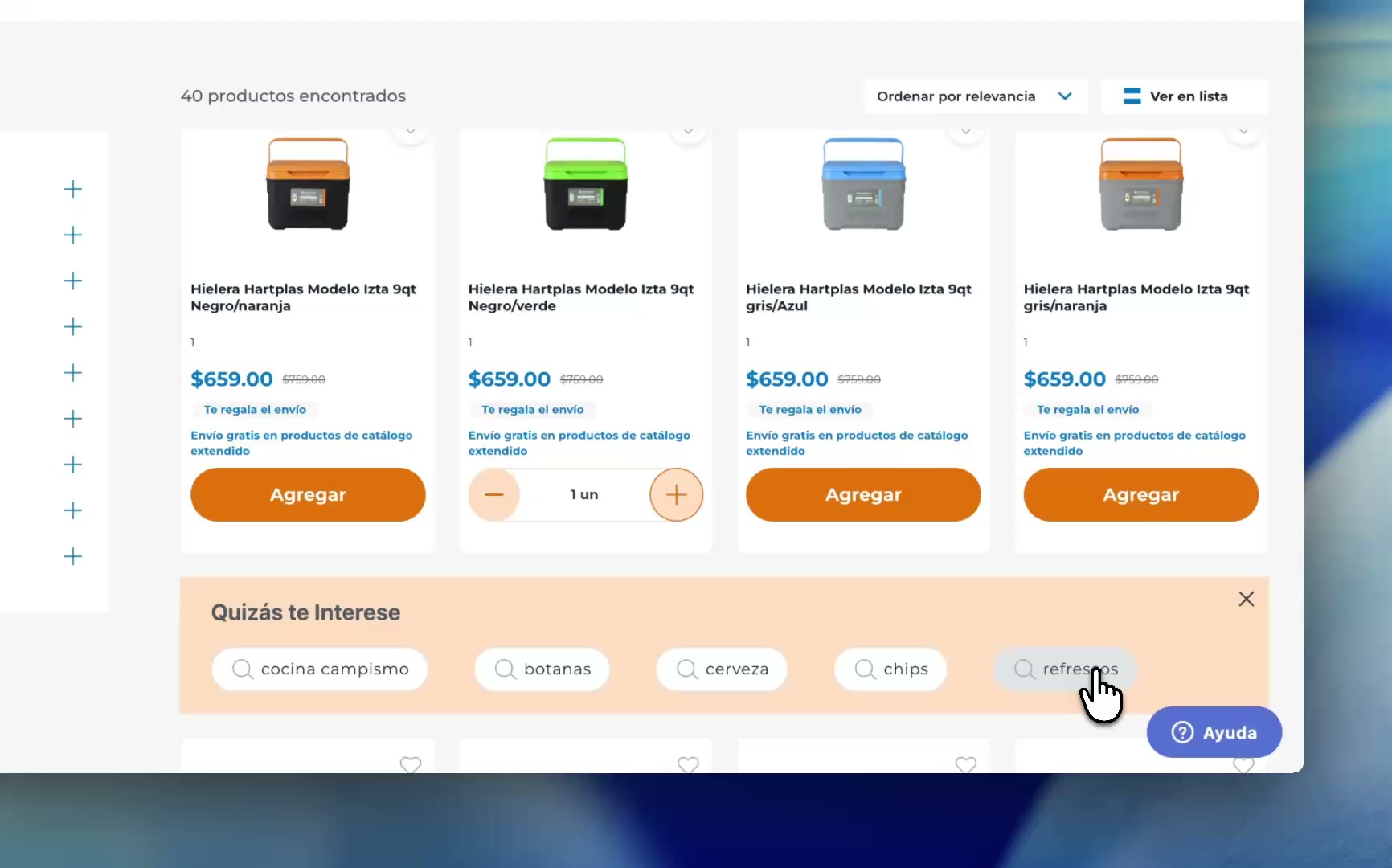
A shopper adds an ice cooler to their cart. Next Queries surface the searches that typically follow it, matching camping stoves, drinks and snacks in the same line. The next mission is already in front of the shopper before they’ve had to think of it, so the basket keeps growing without the need to search again.

AI Spell Check

Search can fail two ways: it can return nothing, or it can confidently return the wrong thing. AI Spell Check is built for both — recovering typos that would otherwise dead-end, and catching corrections that would guess right on spelling but wrong on product.

AI Spell Check runs two checks, not one. The lexical layer proposes a correction. The semantic layer verifies it against what the shopper actually meant — stepping in either when the first check finds nothing, or when it’s about to confidently land on the wrong product.

AI Spell Check correcting a misspelled search query
01The first check

Lexical

Proposes the correction

Matches against your own catalog’s embeddings, not a generic dictionary, so “blu shrt” still resolves to blue shirts — including typos on a word’s very first letters, where most spell checkers give up.

02The second check

Semantic

Verifies the intent

A spelling match isn’t the same as the right match. When two products share an almost-identical name, this layer reads intent rather than characters, confirming the first check’s correction actually means what the shopper meant — not just what looks closest on the page.

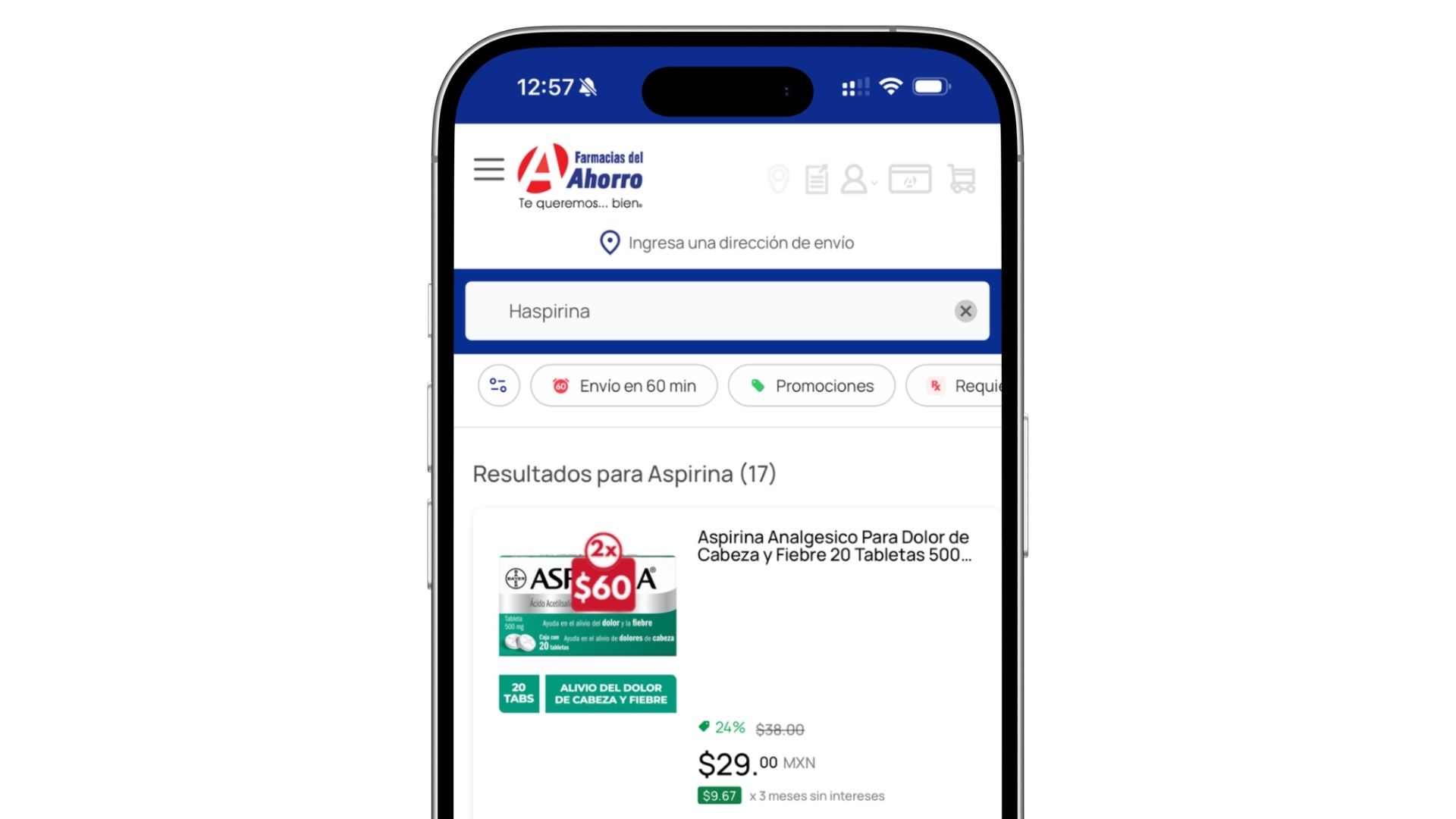
Two pharmacy products can share almost identical names and do completely different things. The first check might “correct” the typo and confidently land on the wrong one — and the shopper would have no reason to doubt it. The second check catches that before it happens, protecting the shopper from a bad match and the retailer from the return.

AI Spell Check correcting Haspirina to Aspirina on a Farmacias del Ahorro search

AI Carousels

A zero-results page doesn’t mean you don’t have a product the shopper wants, and shoppers should be guided like they would by a shop assistant to alternatives they’re interested in. AI Carousels catch that gap: when a search comes back empty, Empathy’s AI Search still surfaces related products so the discovery doesn’t end.

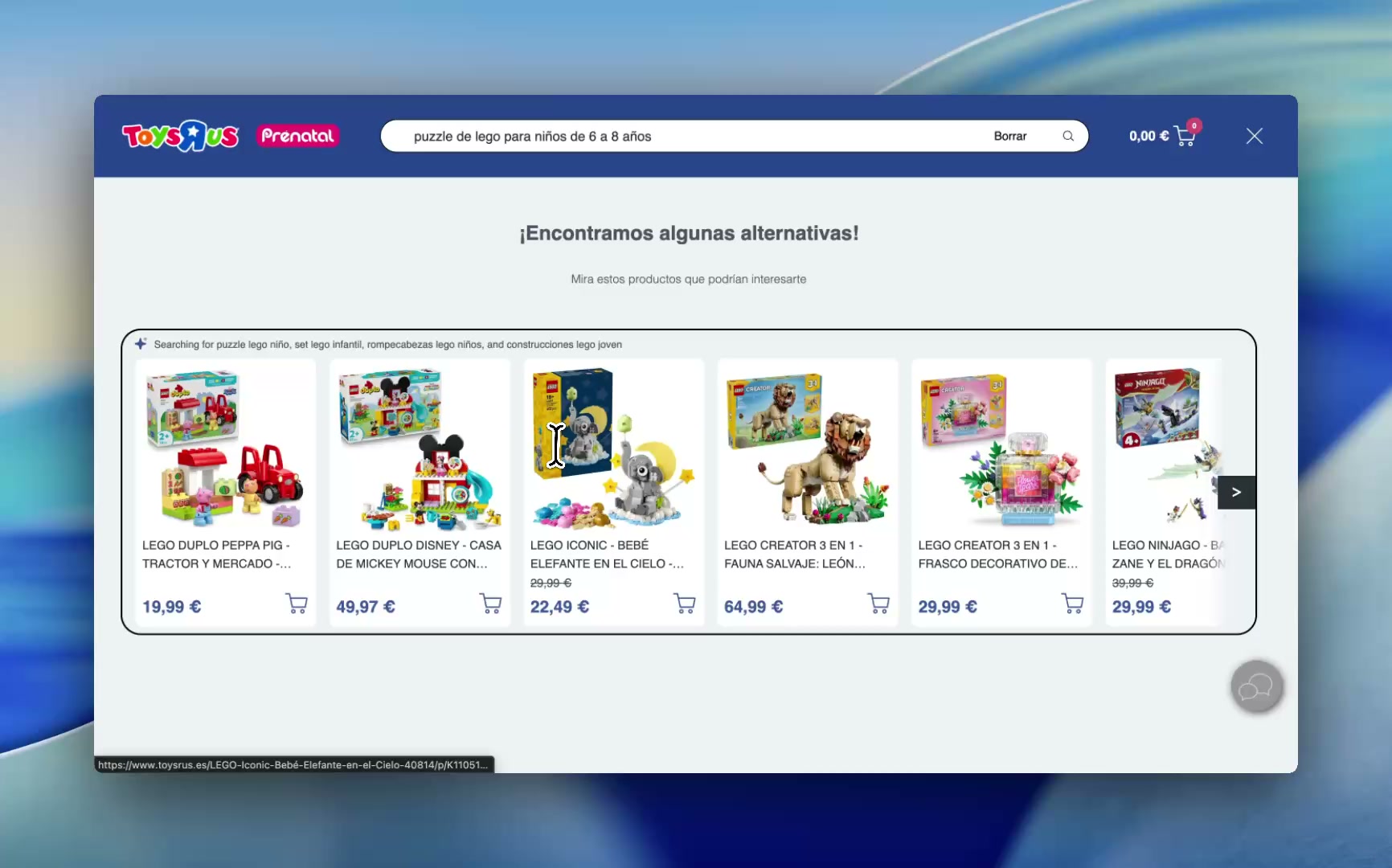
AI Carousels showing product rows on a zero-results page
When a search returns nothing

Keep discovery moving even when no products match the search

Shoppers who hit zero results still find something worth looking at — no retyping, no rephrasing, no leaving.

When a search returns no matching products, AI Carousels activate automatically — no setup required. Rather than showing a blank page, Empathy Platform surfaces horizontally scrollable carousels of products that match what the shopper meant, even when the exact phrasing doesn’t exist anywhere in your catalog. Each carousel is labeled with the intent it’s answering, so the connection is obvious rather than mysterious.

A shopper searches “lego puzzle for 6 to 8 year olds” on a toy store that doesn’t list any products by that name. Nothing matches, but that doesn’t mean the store doesn’t have any relevant products. AI Carousels surface what does exist under different names: lego duplo, lego creator, lego ninjago — labeled clearly by the intent they answer, so the shopper sees why they’re there. The search returned no exact matches from the catalogue, but the discovery didn’t end.

Empathy's approach to AI

Empathy AI runs on self-hosted GPUs and open-source LLMs on proprietary infrastructure. No AWS, no OpenAI tax, no data leaving the building.

Compute

Dedicated GPU cluster

Powered by the solar canopy on the Empathy AI building. No public cloud, no shared tenancy.

Models

Open-source LLMs only

Built on open-weight models Empathy uses and contributes to — auditable, replaceable, yours.

Data

Privacy-first

Your documents and prompts are processed locally. Nothing is sent to third-party AI providers.

Ops

Continuous oversight

The stack is monitored, evaluated and adapted continuously — transparency by design, not by audit.

Empathy AI building

Your shoppers' intent and preferences are yours. Keep them that way.

Whatever your industry, the search bar is the most honest expression of intent and preference a shopper ever gives you. What they actually want, in their own words, at the moment they want it. Run that through Big Tech's AI and it doesn't just answer your shopper, it trains someone else's model too. Empathy Platform keeps it inside your walls: your infrastructure, your rules and your data never leaving your control.

The intent

Your shoppers are telling you everything

Millions of queries reveal exactly what your shoppers want and prefer, query after query. Keep that intelligence on your side of the table, not inside someone else’s model.

The logic

Your rules run the ranking

Promotions, margins, seasonal strategy, brand agreements — commercial decisions applied to every result, configured by your teams, not a generic algorithm.

The edge

What your data knows, no one else does

Years of shopper behaviour and merchandising decisions are competitive advantage, not just data. Run them through a generic model and that advantage stops being exclusively yours.

FAQ

Questions about AI Search

Next step

See AI Search on your catalogue.

We’ll walk through your real queries and show how Related Tags, Next Queries, Related Prompts, AI Spell Check and AI Carousels create better routes to increased baskets and conversion.