
Commerce
laptop for video editing under $1,200
Galaxy S25 Ultra 256GB
noise-cancelling, over-ear, under $200
OLED vs QLED for a bright room



Empathy Platform puts AI where shopper intent already becomes revenue: the search bar. Spec, use-case, compatibility and comparison queries return precise product sets — with your launch priority, brand placements and margin rules applied on your infrastructure.
You are not deciding whether to apply AI to your storefront. That decision has been made for you. The open question is where AI creates commercial value now.
Your storefront is still search-led. The homepage, category and brand pages, product pages, spec filters and the search bar are the journeys your shoppers actually use. Chat is an added layer, not yet the default way people buy a laptop or a TV. The future may be conversational. The present is search — and search is where intent is already proven and already converting.
Add a chat or agent experience on top of the store and hope shoppers change how they shop.
Apply AI to the journeys shoppers already use, with your control over relevance, availability, pricing and brand placement intact. Add conversation where it adds depth — not everywhere.
AI Search: AI understanding on the journey your shoppers already use, with your commercial team in control of every result.
Electronics research is moving into ChatGPT, Google, Claude and Perplexity. By the time a shopper reaches your search bar, they have narrowed the use case, the specs that matter, the budget and often the two models they're choosing between — and they type it in the same language they used there. The change isn't that shoppers want to chat with your store. It's that they arrive with richer, more specific intent, and they express it in full sentences.
One search box now has to handle the full spectrum of intent — from an exact model number to a setup question — and every point on that spectrum is a shopper who is ready to buy.
The same catalogue, queried differently depending on who is searching — and where.


You have already solved for the shopper who knows what they want. Model numbers, brand names, spec filters — that path works. What has changed is the intent arriving in the search bar: use case, specs, compatibility and budget in a single query. A keyword engine keeps the one or two words it recognises and discards the rest, and the workaround is more synonym rules and spec mappings every launch cycle. When relevance fails there, you don't lose a query. You lose a high-value basket to whoever answered it.

“Iphone15pro”, “s24 ultra”, “airpod pro 2” — model numbers are typed a dozen ways. Each variant that misses is a shopper who knew exactly what they wanted.

The shopper says “good for gaming” or “long battery”; the catalogue says refresh rate, GPU and mAh. The shopper says “noise-cancelling”; the catalogue says “ANC”. Neither finds the other.

“TV” or “laptop” returns hundreds of results and no guidance. The shopper is left to work through spec filters on their own, or leave to compare elsewhere.

A discontinued model, a regional variant or a mistyped part number ends on an empty page — with the current equivalent sitting in stock, unshown.

“Laptop for university under $800 with good battery” gets reduced to “laptop”. “Charger for MacBook Air M3” returns every charger. The constraints are dropped and so is the sale.

Model variants, spec synonyms, compatibility tables and every new launch mapped by hand. The team maintains the engine instead of merchandising.
AI Search brings AI understanding to the speed and control of the search you already run. It doesn't replace your relevance engine with a black box. It layers understanding, guidance, recovery and discovery on top of it — while preserving availability, pricing, brand placement and your margin priorities.
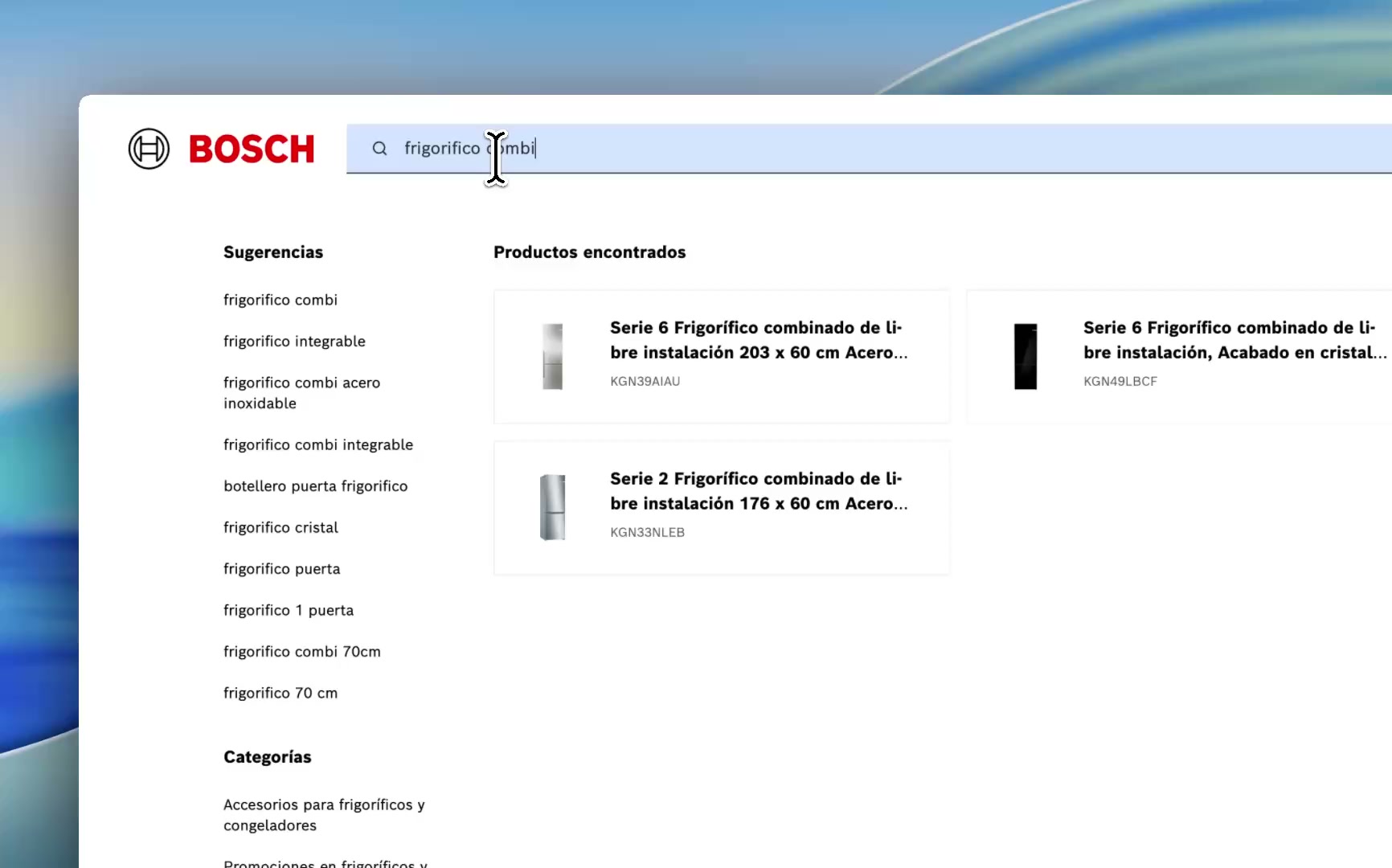

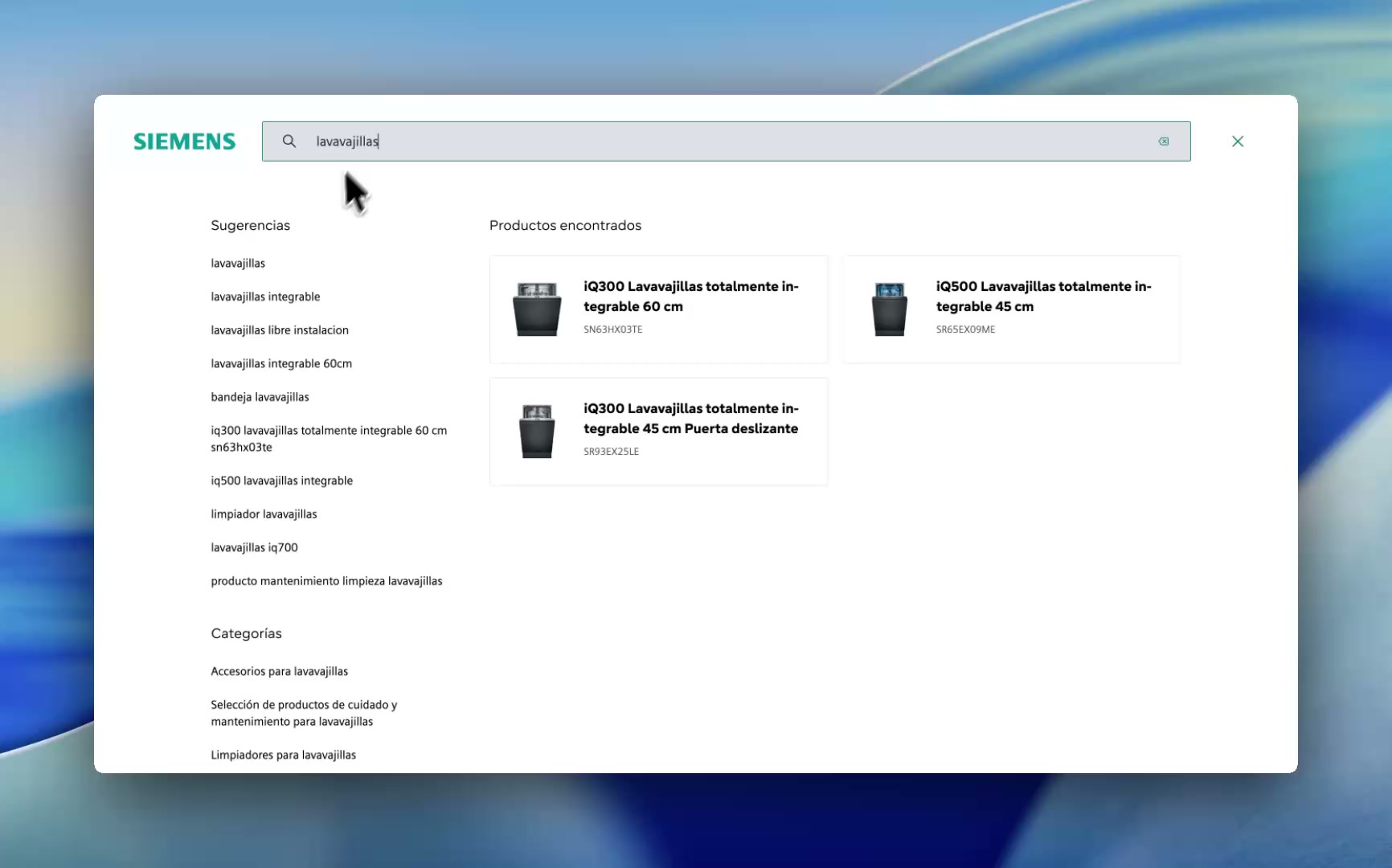
One search covers products and site content. On Bosch, “combi fridge” returns refrigerators in Products — and installation guides, how-tos and spare-parts pages under Site content. Shoppers can buy the appliance or find the manual without leaving search.
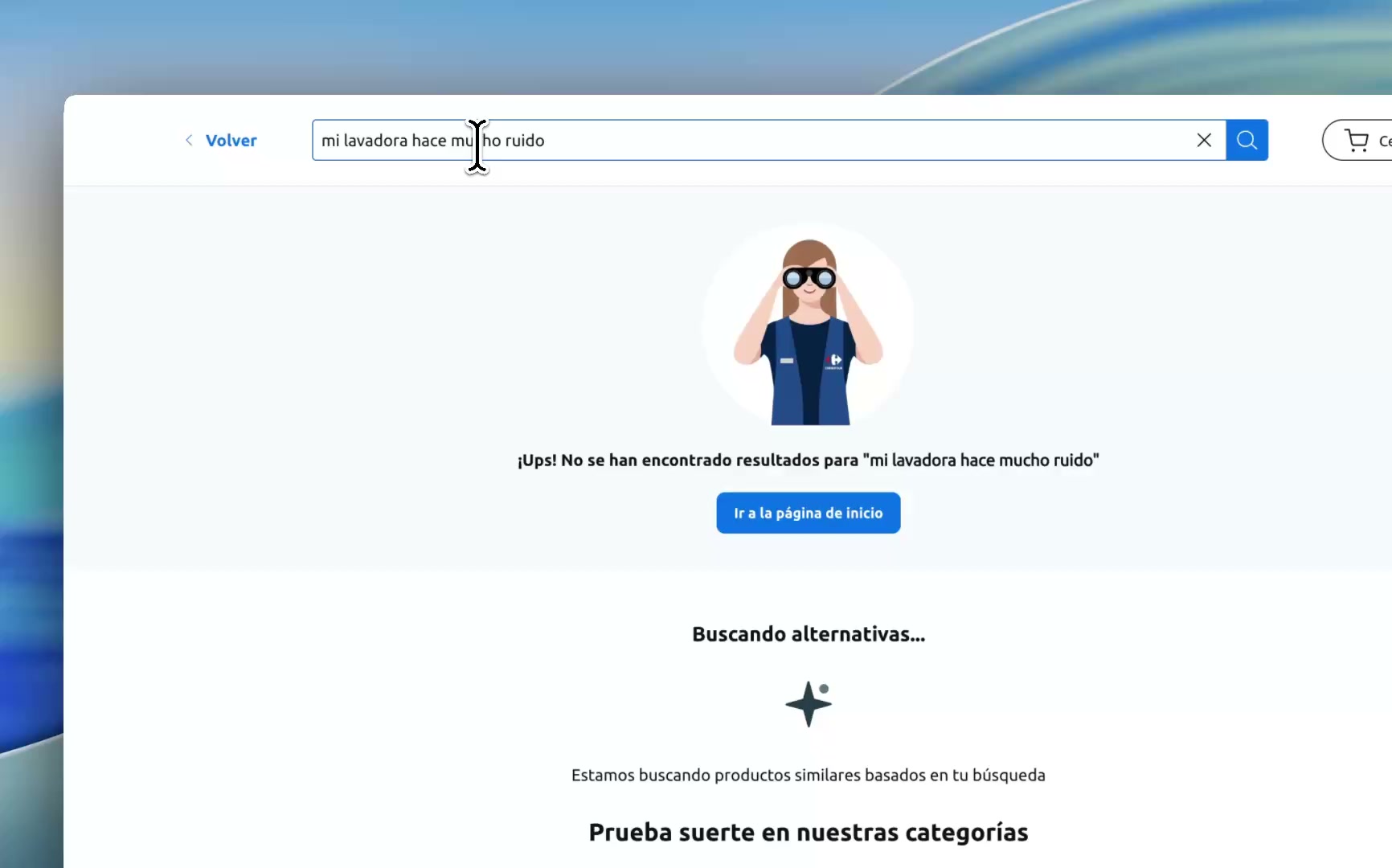

A mistyped model number is corrected before it becomes a dead end. When a discontinued or unavailable model would return nothing, AI Carousels surface the current equivalent and close alternatives in real time.

After “TV”, Related Tags offer one-click refinements — “55 inch”, “OLED”, “for gaming” — and Related Prompts suggest the next question: “which is best for a bright room?”. Shoppers are guided to the shortlist instead of filtering their way there.
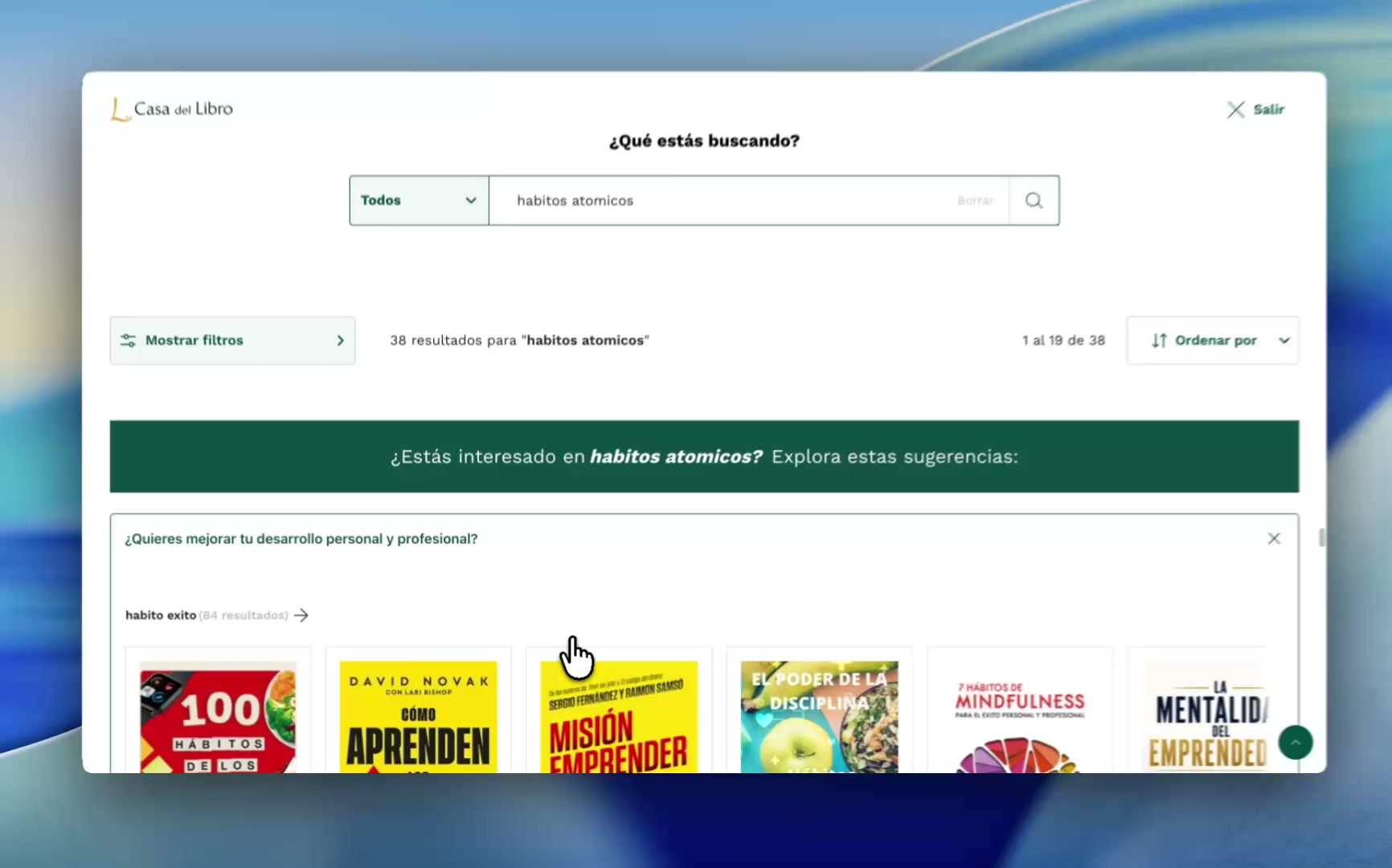
Related Prompts turn catalogue navigation into a conversation: instead of asking shoppers to decode filters or guess at a more specific search term, the system asks a simple question — and each answer either narrows what’s in front of them or opens the next products worth exploring.
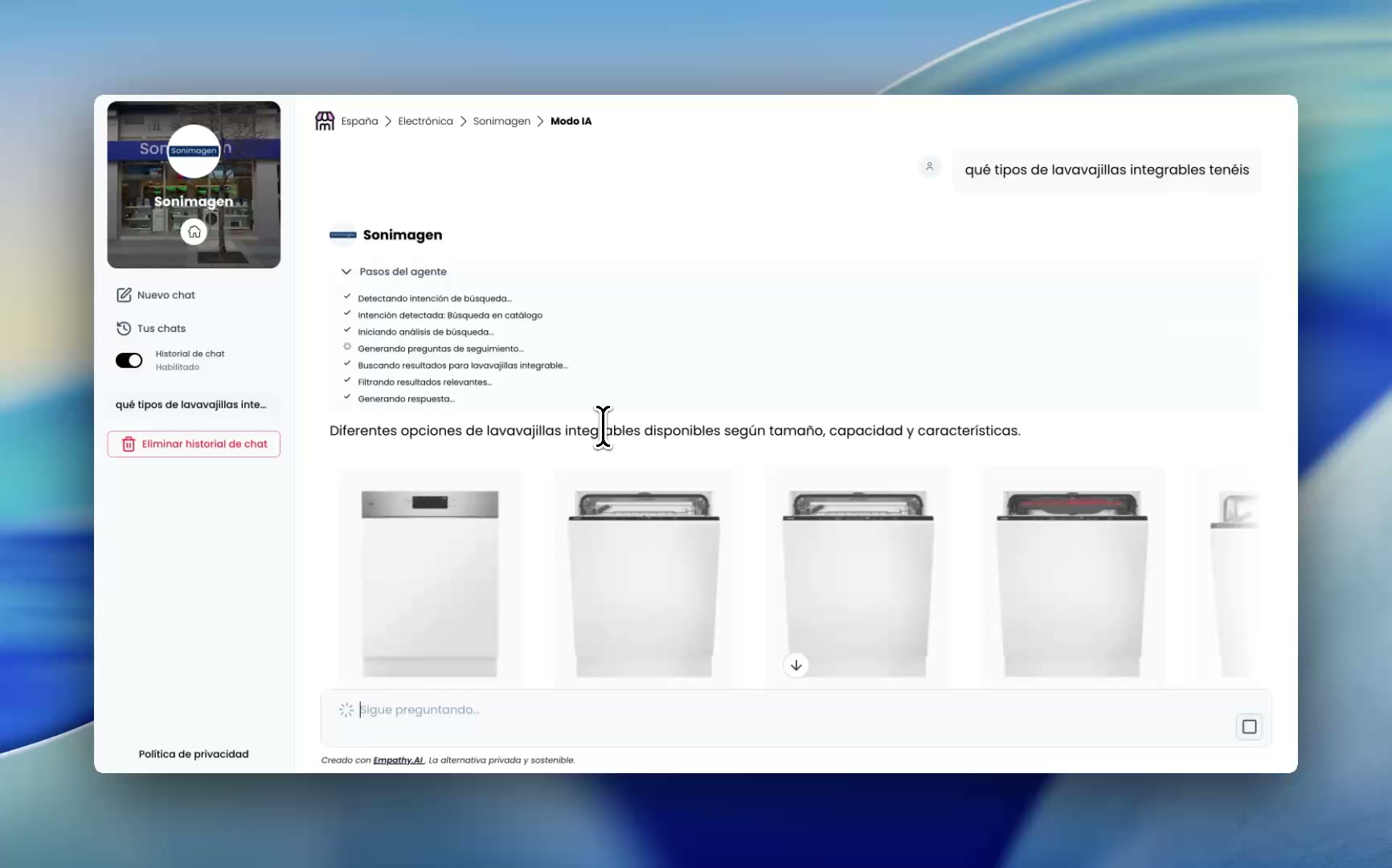

For comparison and advice-led queries, the search bar extends into a conversation: “lighter”, “with more storage”, “under $1,000”. Every spec and budget constraint holds through each turn. Search gives speed. Conversation gives the expert's depth.
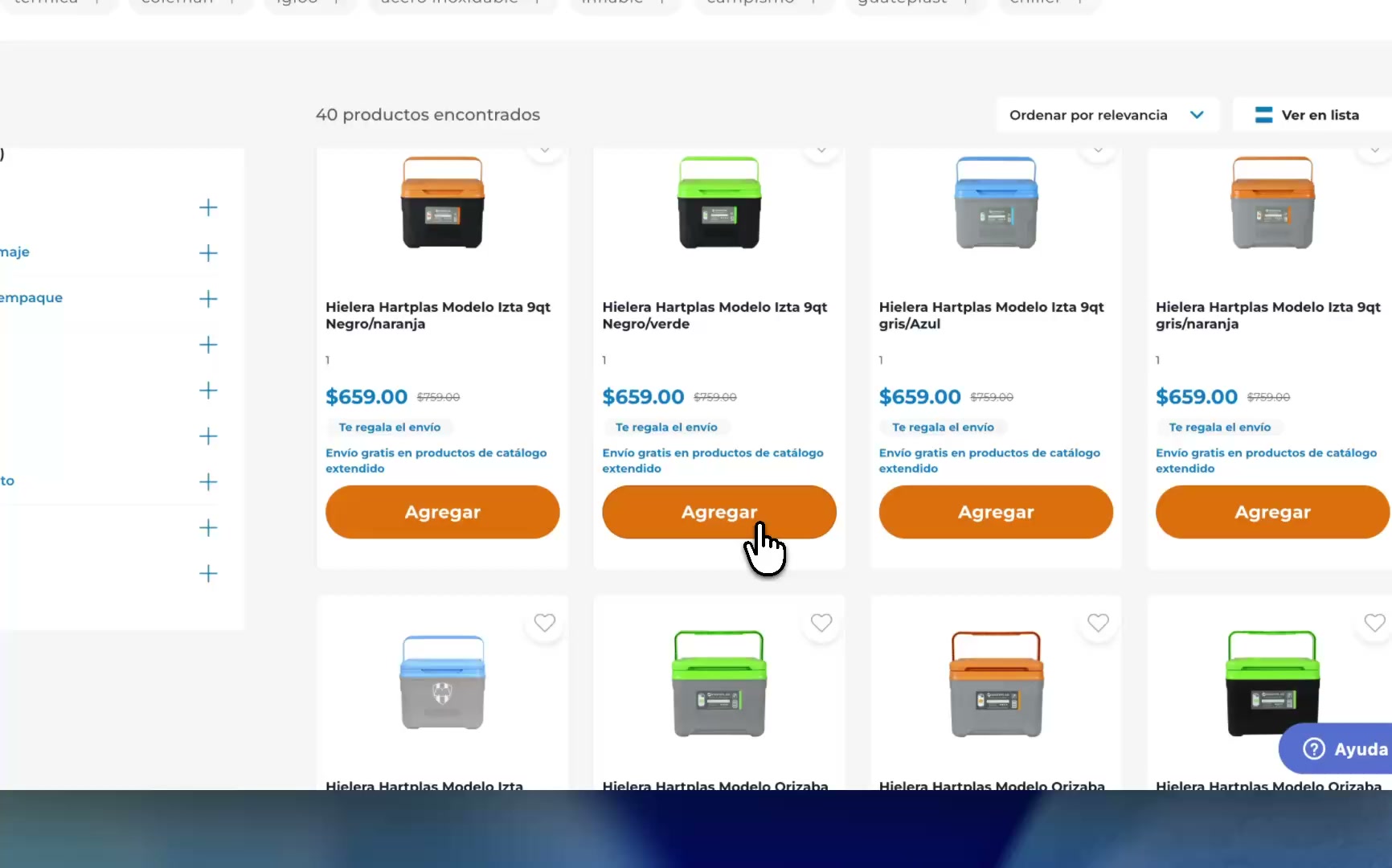

Predicts what the shopper will need next from the mission behind the first search — laptop, then sleeve, then mouse, then protection plan. Accessory and services attach from intent, not a random “you may also like”.
Three pillars that keep AI working for your electronics and technology business — not the other way around.
Electronics and technology search carries thin hardware margins, accessory attach and brand-funded placements. Ranking, launches and attach strategy are yours to set — not a model trained on someone else's catalogue.
Every query is a live signal of demand by spec, brand and price point — ahead of any sales report. It stays in your environment: zero third-party tracking, and a demand signal that feeds your buying and vendor negotiations rather than someone else's model.
Start on SaaS, move to self-managed, then fully self-operated. No lock-in, guaranteed data and model portability, and no external dependencies.
AI that doesn't understand your business can create answers. AI that does can create outcomes.
Start fast, grow into total independence. Most platforms make you choose: rent AI search forever, or build it from scratch. Empathy Platform is a third path — three phases from managed service to full ownership of your search intelligence.
Live in weeks, managed and operated by Empathy. Your rules from day one.
Your private cloud or data centre, with Empathy support. Your data fully inside your perimeter.
Your team, your infrastructure, your search intelligence. Nothing rented, nothing in the middle.
The same query gets the same constrained, ranked answer whether a shopper asks online, a colleague asks on the shop floor, or support asks after purchase.
“Laptop for video editing under $1,200” returns only the models that qualify — ranked by suitability and availability, with your launches and brand placement applied.
Colleagues search by spec, use case or compatibility and check stock across stores mid-conversation. Same logic as the website, on the shop floor.
“Replacement charger for my model”, “same TV, different size” — support finds the right compatible product or current equivalent without switching systems.
Conversion. Discovery. Recovery. Empathy Platform is built to move those numbers.
Use-case and compatibility queries return the right products plus the accessories and services that attach — shoppers build the full setup in one journey.
AI Carousels turn empty results, typos and discontinued models into current equivalents — the highest-frequency save in electronics.
Launches, brand-funded placements and peak-season offers surface on the queries where they convert, configured by your commercial team in real time.
Search and stock agree with each other — online, in-store and in support.
From appliance brands to global retailers — search that understands product complexity and keeps commercial control with the team.

After migrating from Endeca (Oracle) to Empathy Platform, Carrefour achieved +49% in search sessions and a −48% drop in bounce rate.
Read the Carrefour case study
Bosch Home Appliances (BSH) relies on Empathy Platform for search and merchandising of appliances across multiple languages.
Read the BSH announcement
As a BSH brand, Siemens Home Appliances improved its search experience with +13% sessions, +11% CTR and +44% add to cart.
Read the BSH case study
The largest supermarket in the US works with Empathy.co on a PaaS approach and pre-designed components to evolve search and discovery with full control.
Read the Kroger case study