
MOLLY vs. THE MACHINES: When machines reflect us back
MOLLY vs. THE MACHINES: When machines reflect us back
Power, responsibility, and the human cost of systems built without accountability

Product Writer
At Empathy.ai, we believe that technology is never neutral.
It can expand human possibility or quietly erode it. It can help us understand the world more deeply, or reduce complex human experience into something optimised, extractable, and controlled. Every system we build carries values within it, whether we acknowledge them or not.
Alongside the launch of the website for the feature documentary MOLLY vs. THE MACHINES, a film we are proud to executive produce, these questions feel impossible to ignore.
A decade ago, many of the anxieties surrounding technology lived comfortably in speculative fiction. Series like Black Mirror imagined futures where algorithms shaped intimacy, governed behaviour, and blurred the boundary between care and control. Those worlds felt dystopian because they felt unreal.
They are no longer distant.
MOLLY vs. THE MACHINES is not a speculative warning. It is a documentary grounded in the present, based on real events. It explores how real technological systems, built by real companies and governed by real incentives, shape human lives in ways we are only beginning to understand. What once looked like fiction has become reality.
This post is not just about a film. It is about responsibility.
A story about power, resistance, and the digital condition
Directed by Marc Silver, MOLLY vs. THE MACHINES follows the story of Molly Russell, a teenager whose life was tragically shaped by algorithmic systems optimised for engagement rather than care. Through her story, the film broadens its scope to examine the structures behind modern digital platforms: how recommendation engines work, how data is harvested, and how surveillance-driven business models quietly influence behaviour, emotion, and mental health.
This is not a film about technology as an enemy. It is a film about power asymmetry.
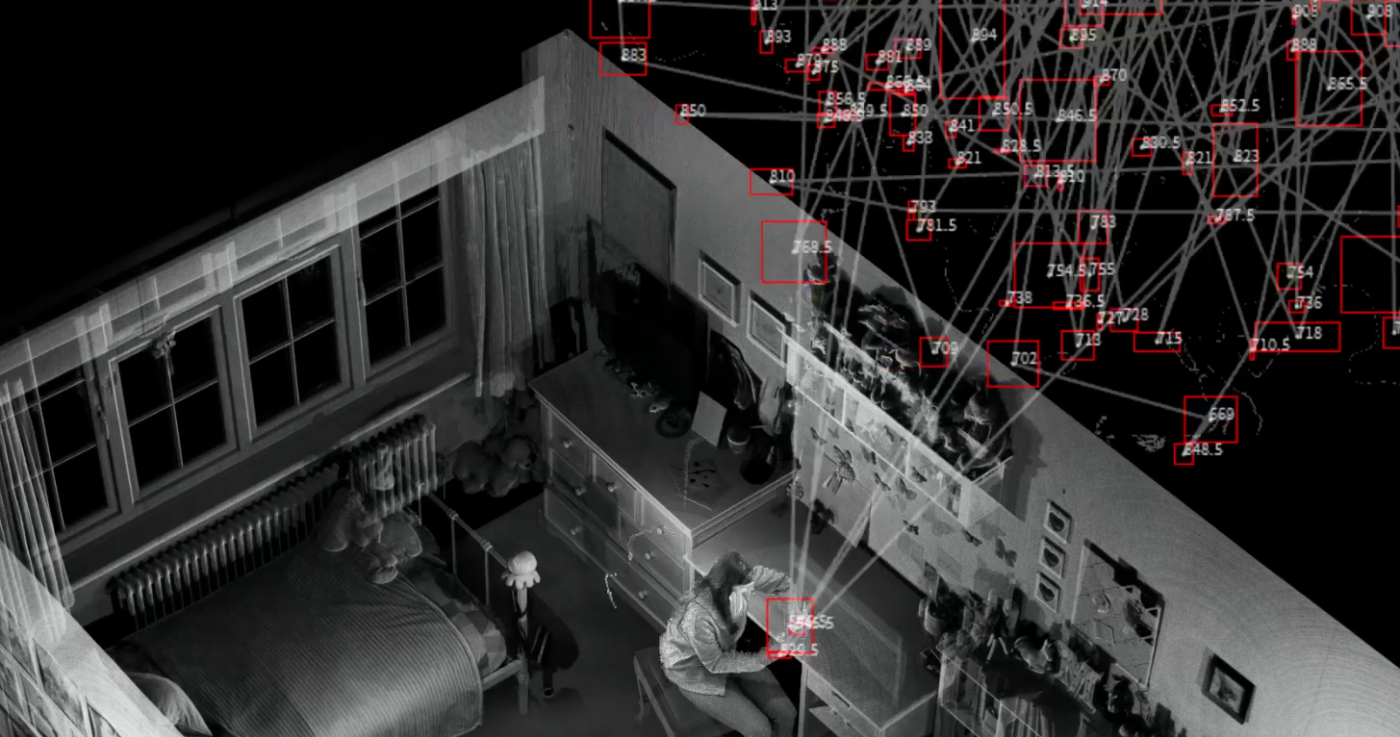
It asks who designs the systems that conduct our attention. Who benefits from them. And who bears the cost and who pays the consequences when optimisation replaces accountability.
Rather than offering answers, the documentary creates space for reflection. It invites the public to question the neutrality of algorithms, the incentives of big tech, and the cultural habit of outsourcing responsibility to machines we barely understand.
For a general audience, MOLLY vs. THE MACHINES is both accessible and urgent. It does not require technical expertise, only human attention. It speaks to parents, educators, policymakers, technologists, and anyone living inside digital systems they did not choose but cannot avoid.
Why Empathy.ai chose to stand behind this film
Empathy.ai is an executive producer of MOLLY vs. THE MACHINES, not as a branding exercise, but as a statement of alignment.
The foundations of our company work come from a simple conviction: AI should not depend on distant servers, fragile networks, or opaque providers. Intelligence should live where responsibility lives.
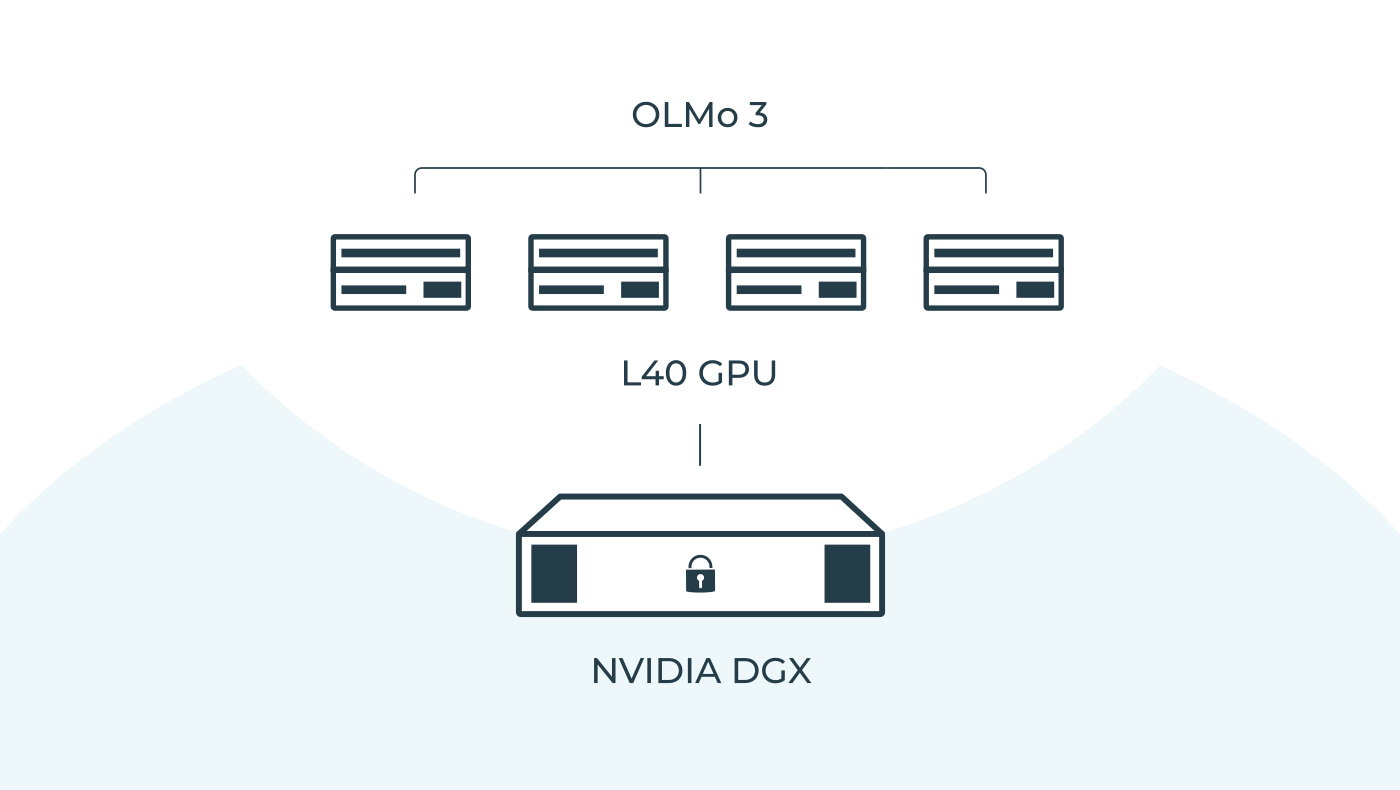
That belief has factual consequences. We build in-house, private-cloud AI powered by dedicated hardware, open-source models, and renewable energy. When AI runs locally, data stays safe. Uptime is governed, not outsourced. Sustainability becomes operational, not aspirational. Intelligence becomes infrastructure, not a subscription.
These principles are not speculative ideals or future aspirations. They already shape how we build, deploy, and govern AI systems today.
Supporting this film is a natural extension of that philosophy. MOLLY vs. THE MACHINES exposes the human cost of systems designed without accountability. Our role as executive producers reflects a commitment to demonstrating that alternatives are not only possible, but already real.
Technology can be built differently. The question is whether we choose to.
Where Molly’s story meets our engineering practice
What connects a documentary about algorithmic harm with a company building private, sustainable AI infrastructure is not aesthetics or messaging. It is structured.
Molly’s story reveals what happens when systems are optimised for scale, engagement, and extraction without transparency or care. Empathy.ai’s work is a response to that same architecture companies must fight, approached from an engineering and artistic standpoint simultaneously.
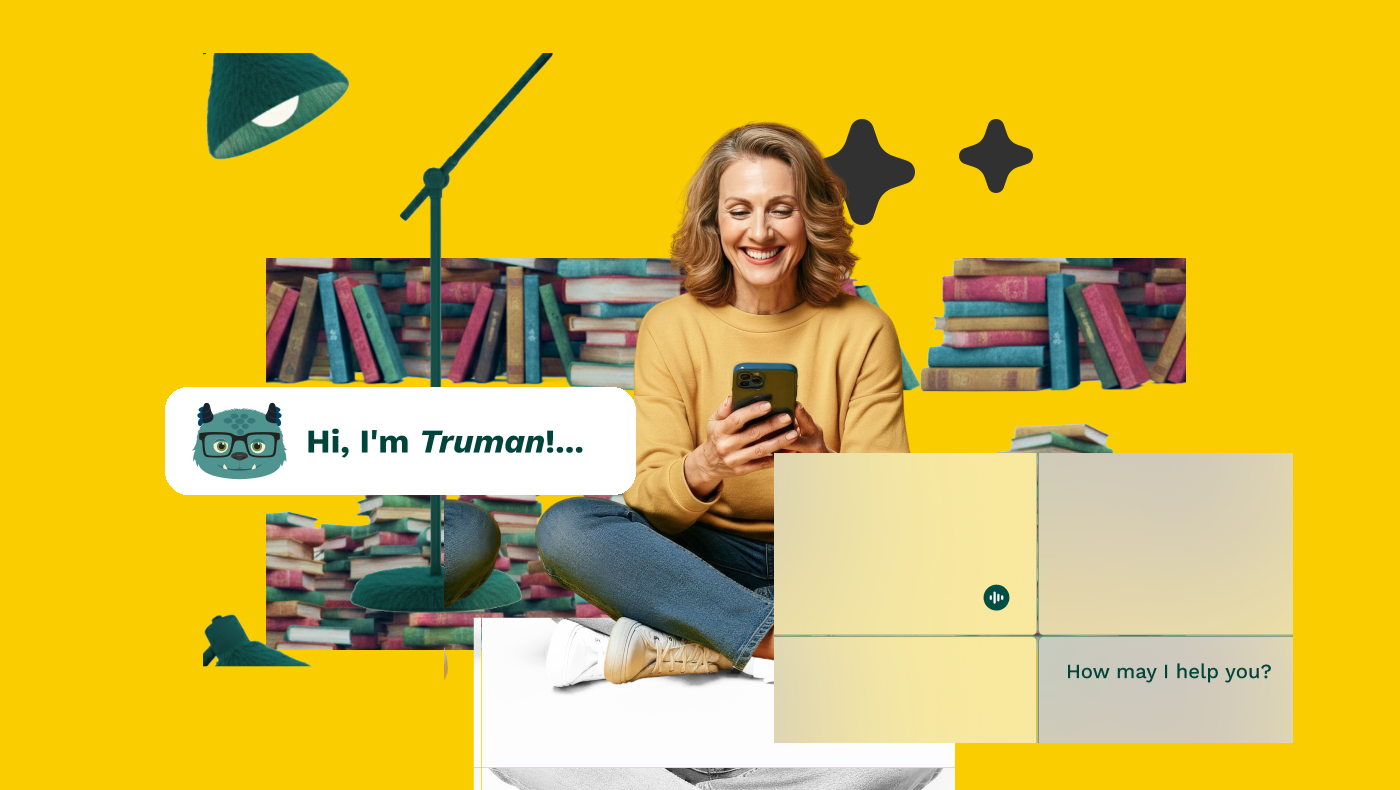
As part of the film’s ecosystem, we developed an AI experience designed not to comfort, persuade, or simulate empathy, but to provoke thought. This machine experience runs on a private, self-hosted, sustainable infrastructure in our own headquarters. It tracks no users. It stores no conversations. It exists as an object of inquiry rather than a character.
The experience explicitly rejects anthropomorphism. It does not pretend to feel, to care, or to understand. Instead, it exposes its limits, its architecture, and its contradictions. It invites visitors to reflect on how AI governs meaning, attention, and power, while acknowledging that it is itself born from those same computational paradigms.
In this way, the project becomes both artistic and technical. It blends storytelling with infrastructure, and ethics with engineering. It shows that critique does not have to exist outside technology. It can be built into it.
Stepping inside the critique
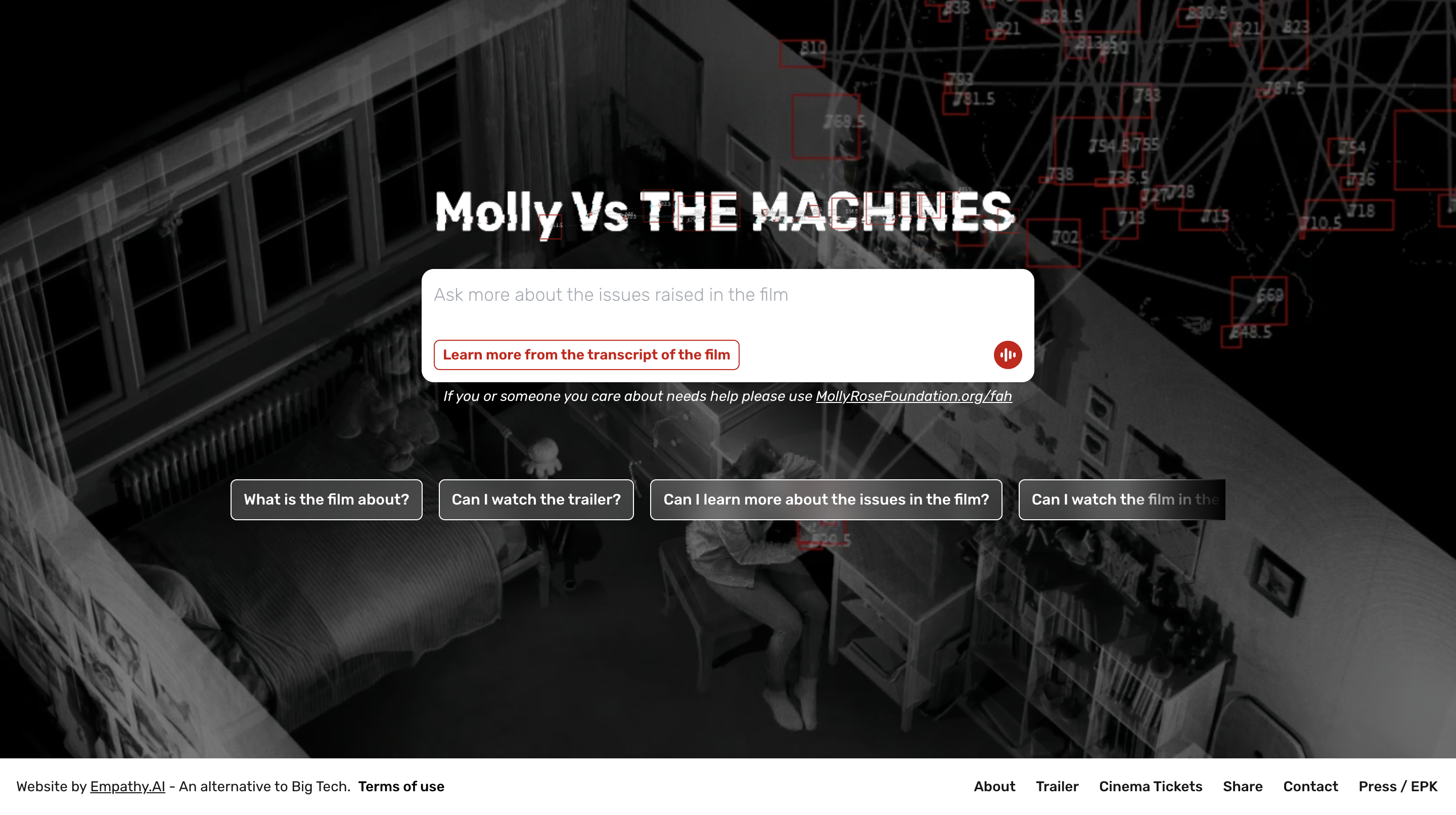
The launch of the MOLLY vs. THE MACHINES website embodies the opening of this experience to the public.
Visitors can explore the documentary film, its context, and the broader questions it raises, but they can also step inside a machine designed to reflect rather than persuade. This is not an AI designed to mimic humanity. It is designed to help us see more clearly the systems we interact with everyday.
We invite you to navigate the website, engage with the film, and enter the machine experience with curiosity rather than expectation. Not to find answers, but to sharpen questions.
Because the future of technology will not be decided by machines alone. It will be decided by the values we encode, the infrastructures we choose, and the responsibilities we refuse to outsource.
The website is now live.\ Step inside.